Smooth Riding Is Fast Riding
Smooth Riding Is Fast Riding – Why Planning Beats Speed Every Time
At first glance, the phrase "Smooth Riding Is Fast Riding" sounds like something you'd hear at a race circuit. It conjures images of riders pushing the limits in search of lap times and outright speed.
On the road, however, it means something completely different.
Advanced riders understand that smoothness isn't about riding faster than everyone else. It's about making progress safely, confidently and with complete control. Ironically, when you develop smooth, systematic riding techniques, you often arrive sooner—not because you're travelling faster, but because you're riding more efficiently.
Speed Is a Result, Not the Objective
One of the biggest misconceptions about advanced motorcycle training is that it teaches riders how to go faster.
It shouldn’t.
It teaches riders how to observe earlier, plan further ahead, position the motorcycle effectively, manage speed appropriately and maintain stability through every situation.
The objective is always safety.
When every action flows naturally into the next, the ride becomes smoother, less stressful and more enjoyable. Any increase in average progress comes from better planning, not higher speeds.
Smooth Riders Make Better Decisions
Every unnecessary input unsettles the motorcycle.
Late braking, harsh acceleration, abrupt steering and constant speed changes all reduce stability and increase workload.
Smooth riders avoid these situations because they've already gathered the information they need.
They've looked well ahead.
They've identified potential hazards.
They've selected the correct speed before the bend.
They've chosen a road position that gives them the best possible view.
Instead of reacting at the last second, they're anticipating what will happen next.
That's the hallmark of advanced riding.
Planning Creates Progress
Imagine two riders travelling along the same country road.
The first rider accelerates hard on every straight before braking heavily for each bend. Their speed varies constantly, the bike pitches forwards and backwards, and every corner feels rushed.
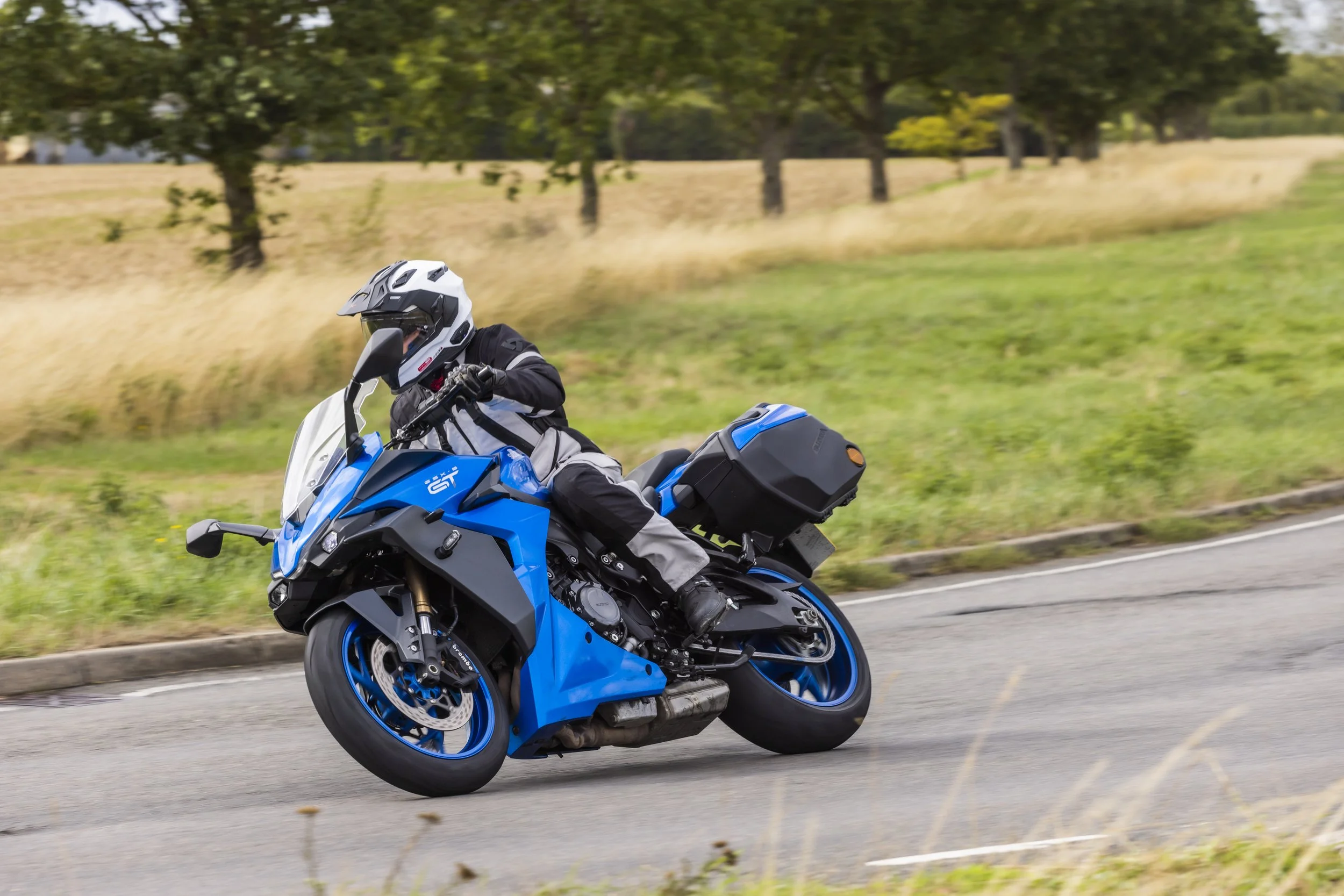
The second rider reads the road ahead, adjusts speed early, enters each bend at an appropriate speed and rolls smoothly through before accelerating progressively when the view opens.
Who is making better progress?
Surprisingly, it's often the second rider.
Not because they're riding faster, but because they're never wasting time recovering from poor planning.
More importantly, they're leaving themselves far more options if something unexpected appears around the next corner.
Smoothness Improves Safety
Smooth riding benefits almost every aspect of motorcycle control.
It improves tyre grip because you're not asking the tyres to cope with sudden changes in braking, steering and acceleration all at once.
It improves passenger comfort.
It reduces rider fatigue on long journeys.
It gives following drivers more predictable signals.
It reduces wear on tyres, brakes and drivetrain components.
Most importantly, it gives you time.
Time to observe.
Time to think.
Time to react.
Time is one of the greatest safety margins any rider can create.
Advanced Riders Rarely Look Busy
Watch an experienced advanced rider and one thing quickly becomes obvious.
They never appear rushed.
Their machine stays balanced.
Their steering inputs are almost invisible.
Braking is progressive rather than abrupt.
Acceleration is smooth and deliberate.
Everything looks calm.
That's because the real work has already happened inside the rider's mind. They've processed the information long before they need to act.
As the saying goes:
"The more you plan, the less you have to react."
Smooth Doesn't Mean Slow
Some riders hear the word smooth and assume it means cautious or slow.
It doesn't.
Smooth riding means using the appropriate speed for the conditions while maintaining complete control.
Sometimes that means riding well below the speed limit because visibility is poor or hazards are developing.
At other times it means making safe, efficient progress on an open road because you've planned well and can clearly see that it's appropriate to do so.
Advanced riding isn't about travelling at one particular speed.
It's about always travelling at the right speed.
How You Can Ride More Smoothly
Improving smoothness doesn't happen overnight, but every rider can begin developing the habit by focusing on a few simple principles:
Look much further ahead than feels natural.
Read the road for clues such as junctions, hedges, parked vehicles and changes in road surface.
Complete your braking before entering bends whenever possible.
Apply acceleration progressively rather than abruptly.
Keep your steering inputs gentle and deliberate.
Give yourself plenty of thinking time by avoiding unnecessary urgency.
Small improvements in each of these areas quickly add up to a safer, more enjoyable ride.
The SmoothRider Approach
At SmoothRider, post-test coaching isn't about encouraging riders to go faster.
It's about helping you become calmer, more observant and more systematic.
When you understand how to plan effectively, your riding naturally becomes smoother. As a result, your progress improves, your confidence grows and your safety margins increase.
Smooth riding isn't about speed.
It's about control.
And riders who stay in control are the ones who enjoy motorcycling for many years to come.