Riding in the Rain – Trust the Bike, Trust Yourself
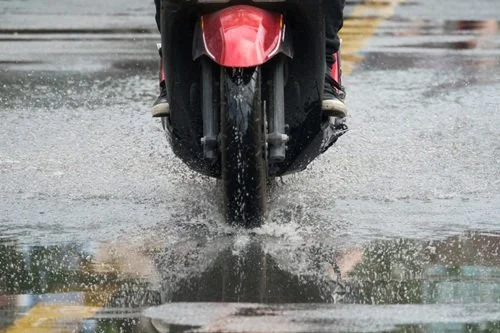
Few things empty the roads faster than dark clouds and the first drops of rain. For many riders, the weather changes more than the road surface—it changes their mindset.
Suddenly every bend feels slippery, every painted line looks like black ice, and every control input becomes hesitant. Hands grip the handlebars tighter, shoulders rise, breathing becomes shallow and the bike, somehow, feels less stable.
But here's the irony.
The motorcycle hasn't changed nearly as much as the rider has.
Smoothness Is Your Greatest Safety Feature
If there is one word that defines good riding in the wet, it's smooth.
Every control input should be deliberate and progressive. Gentle acceleration. Progressive braking. Smooth steering. Calm gear changes.
Tyres are incredibly capable of dealing with wet roads, but they don't respond well to sudden demands. Ask too much of them too quickly and they'll let you know.
The smoother your inputs, the more grip remains available.
Relax... Even When Your Brain Says Otherwise
This is perhaps the hardest part of riding in the rain.
Our natural instinct is to tense up.
We grip the bars harder, lock our elbows and sit rigidly in the saddle because we think it gives us more control.
In reality, it does the opposite.
A tense rider transmits every wobble and every unnecessary movement into the motorcycle. The bike becomes unsettled not because of the rain, but because the rider won't allow it to move naturally beneath them.
Relax your shoulders.
Keep your arms slightly bent.
Hold the handlebars firmly enough to control the bike, but lightly enough that you're not steering by accident.
A relaxed rider allows the motorcycle to find its own balance.
Look Further Ahead
Wet roads demand better planning.
Looking further ahead gives you more time to identify hazards, adjust your speed gradually and avoid sudden reactions.
Instead of braking hard at the last moment, you begin slowing earlier.
Instead of accelerating sharply out of a bend, you feed the power in progressively.
Everything becomes calmer.
That's exactly what the bike needs.
Read the Road
Rain doesn't affect every part of the road equally.
Watch for:
White lines and road markings.
Manhole covers and metal inspection plates.
Diesel spills near junctions and roundabouts.
Fallen leaves.
Mud washed onto country roads.
The first rain after a long dry spell, when oil and dust rise to the surface.
Good observation allows you to adjust your riding before reaching these hazards rather than reacting once you're on them.
Corner with Confidence
Many riders fear leaning in the wet.
The secret isn't to avoid leaning altogether—it's to avoid asking the tyres to do too many things at once.
Brake before the bend.
Choose an appropriate speed.
Maintain a light, positive throttle through the corner.
Then let the motorcycle do what it was designed to do.
The bike is often capable of more than your confidence suggests.
Increase Your Space
Everything takes longer in the rain.
Stopping distances increase.
Drivers make more mistakes.
Visibility is reduced.
By increasing your following distance and giving yourself more space, you buy valuable thinking time.
Time is often the greatest safety margin of all.
Confidence Comes from Trust
Experienced riders don't ride confidently in the rain because they're fearless.
They ride confidently because they trust their observation, trust their planning, trust their smoothness and trust the motorcycle.
Rain changes the conditions.
It doesn't change the principles.
Ride smoothly.
Stay relaxed.
Look well ahead.
The bike will usually reward you for it.